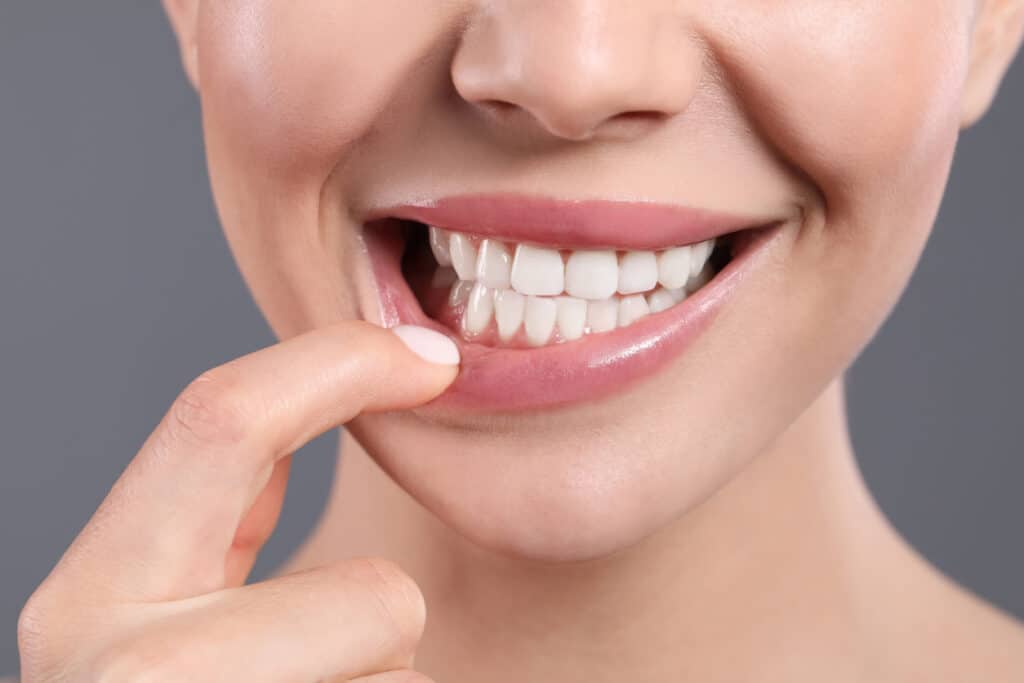
Bleeding gums when flossing is an acute inflammatory response caused by bacterial plaque trapped beneath the gumline. Notably, medical literature supports that not flossing daily is typically the main cause of bleeding gums [1] (Clinic, n.d.). When you disrupt this plaque with dental floss, the irritated tissue naturally bleeds. Consistent, gentle flossing removes the bacteria, allowing the gums to heal and the bleeding to stop within seven to fourteen days.
Should You Floss Before or After You Brush?
This is one of the most common questions patients ask our hygiene team at Cary Towne Dental. For years, people assumed the order did not matter as long as they completed both tasks. However, clinical data shows that flossing before you brush yields far better results for your gum health. Clinical evidence indicates that flossing followed by brushing is preferred over brushing then flossing to reduce interdental plaque [2] (Mazhari et al., 2018). When you floss first, you physically break up the sticky bacterial biofilm trapped between your teeth. You pull out those hidden food particles. Then, when you follow up with your toothbrush, the bristles can easily sweep away that loosened debris. More importantly, flossing first opens up the spaces between your teeth. This lets the protective fluoride in your toothpaste flow deep into those crevices, strengthening your enamel and soothing your gum tissue where it needs it most.
Are You Flossing Too Hard? (String vs. Tape)
While bleeding is usually caused by bacterial inflammation, mechanical trauma is also a real threat. If your gums sting sharply while you floss, you might be using the wrong tool or applying too much force. Not all dental floss is created equal. If you have tightly spaced teeth, standard unwaxed strings can fray, catch, and snap painfully against your gums. If you struggle with tight contacts, switch to a waxed dental tape or a glide-style floss. These wider, coated ribbons slide smoothly between crowded teeth without friction. Remember to hold the floss lightly with just your index fingers and thumbs. You want to wipe the side of the tooth, not saw into the pink tissue. A gentle, gliding motion prevents physical cuts and keeps your daily routine comfortable.
Comparisons: Finding the Right Flossing Tool
Understanding your daily hygiene options helps you choose the tool that fits your comfort level and lifestyle.
Flossing Tool | Cost Predictability | Durability & Efficacy | Maintenance Level |
Traditional String Floss | Very Low (Cost of the spool). | High. Excellent at scraping sticky plaque off the tooth surface. | High. Requires manual dexterity and daily use. |
Water Flosser | Moderate (One-time device purchase). | High. Uses fluid dynamics to flush out deep pockets gently. | Low. Fill with water daily; clean the reservoir periodically. |
Interdental Brushes | Low (Cost of a multipack). | Moderate. Great for wide gaps, but cannot fit tight contacts. | Moderate. Replace the brush every few days as bristles bend. |
Floss Picks | Low (Cost of the bag). | Low to Moderate. Often pushes bacteria from one tooth to another. | High. Single-use plastic; not ideal for environmental sustainability. |
Can Mouthwash Replace Your Daily Flossing Routine?
When life gets busy, it is tempting to look for quicker alternatives for a daily flossing routine. Many patients try to swap their evening flossing routine for a quick swish of strong mouthwash, hoping the liquid will wash away plaque. Unfortunately, this shortcut leaves your gums highly vulnerable to bleeding and infection. Bacterial plaque is not just sitting loosely on your teeth; it forms a resilient, sticky biofilm that bonds to your enamel. Liquid mouthwash simply flows right over this barrier without breaking it down. The only way to remove plaque is through direct mechanical disruption, meaning you must physically wipe it away with a brush or floss. The American Dental Association states that mouthwash is not a replacement for daily brushing and flossing; using mouthwash may be a helpful addition to your daily oral hygiene routine [3] (ADA, 2021).
Navigating Floss Around Dental Crowns and Clear Aligners
If you have upgraded your smile with cosmetic dental work or adult orthodontics, your flossing technique needs to evolve. Standard flossing habits can sometimes loosen older restorations or fail to clean properly around modern appliances. If you wear clear aligners, your plastic trays lock bacteria tightly against your teeth for 22 hours a day. Flossing after every meal becomes mandatory to prevent acid from irritating your gums. If you have a dental crown or a dental bridge, you must change how you remove the floss. Instead of snapping the string back up through the contact point (which can accidentally pull on the crown’s edge), let go of one end of the string and pull it through the side. Specialized floss threaders also help you safely clean under dental bridges without damaging your cosmetic investment.
FAQS
1. Should I stop flossing if my gums are bleeding?
No. Stopping your routine lets bacteria multiply, which will only worsen the inflammation. Continue to floss gently once a day. Bleeding signals the area needs more attention, not less. As you clear the plaque away, the bleeding should resolve naturally in about a week.
2. Can I use a water flosser instead of string if my gums are sensitive?
Yes. A water flosser is a fantastic alternative if traditional string feels too sharp on your tender gums. Set the device to the lowest pressure setting. The gentle stream of water will safely flush out food debris and bacteria without causing physical friction against your healing tissue.
3. Are bleeding gums normal during pregnancy?
It is very common, but it still requires attention. Hormonal fluctuations during pregnancy increase your body’s inflammatory response to dental plaque, leading to a condition called “pregnancy gingivitis.”
References
[1] Clinic, C. (n.d.). Seeing pink in the sink? Why your gums bleed when flossing. Cleveland Clinic. Retrieved October 5, 2026, from https://health.clevelandclinic.org/is-it-bad-if-my-gums-bleed-when-i-floss
[2] Mazhari F, Boskabady M, Moeintaghavi A, Habibi A. The effect of toothbrushing and flossing sequence on interdental plaque reduction and fluoride retention: A randomized controlled clinical trial. J Periodontol. 2018;89(7):824-832. doi:10.1002/JPER.17-0149
[3] ADA. (2021, December 1). Mouthrinse (mouthwash). Www.Ada.Org. https://www.ada.org/resources/ada-library/oral-health-topics/mouthrinse-mouthwash