
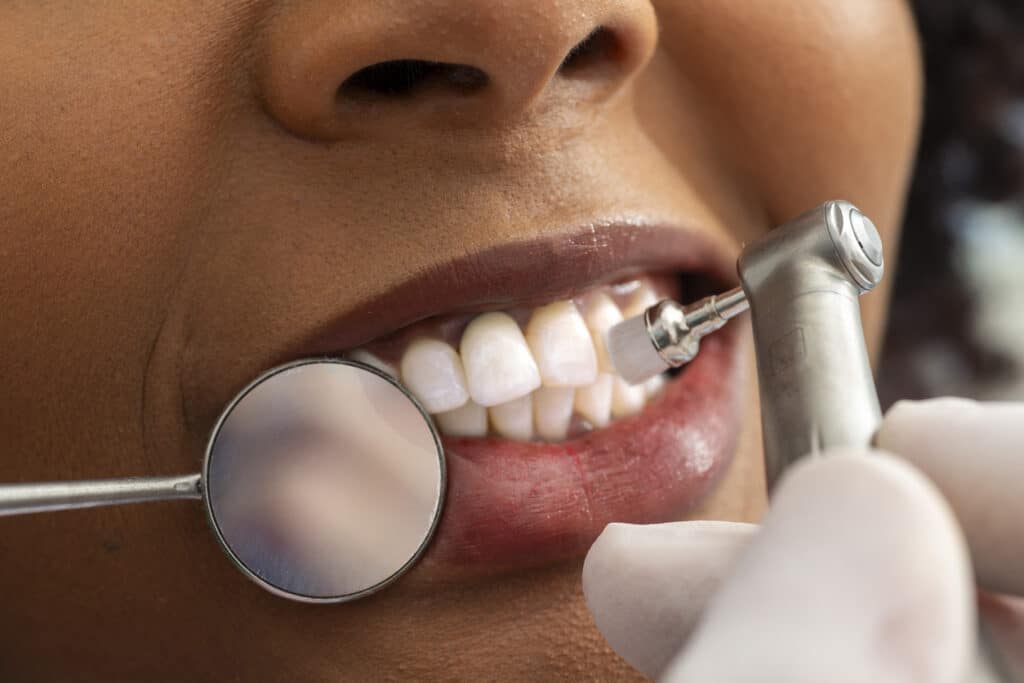
An at-home oral hygiene protocol with Cary Towne Dental is a daily preventive dental routine that removes sticky bacterial plaque and balances your mouth’s pH between professional visits. The American Dental Association supports brushing twice daily with fluoride toothpaste for two minutes to help prevent caries and gingivitis [1] (ADA, 2024). This targeted regimen protects your natural enamel, prevents gum inflammation, and preserves the results of your routine dental cleanings.
The Workplace Toolkit: Protecting Your Smile at the Office
You spend much of your waking hours at work. Fortunately, you do not need to bring your entire bathroom setup to the office to keep your teeth clean. For busy professionals, a simple desk toolkit makes a big difference. Keep a pack of xylitol-sweetened gum or mints in your desk drawer. Xylitol is a natural sweetener that actually blocks cavity-causing bacteria from sticking to your teeth. Clinical literature supports xylitol as an effective self-applied caries-preventive agent [2] (Janakiram et al., 2017). Chewing a piece for 10 minutes after a business lunch stimulates saliva and clears away food debris. You should also keep a small pack of interdental brushes in your laptop bag. These tiny conical brushes gently clean in between your teeth after a quick snack, so you can smile with confidence at your next appointment.
The Magic of Saliva: Your Body’s Natural Enamel Protectant
Your body has a natural defense against tooth decay, and it costs you nothing. Saliva is your mouth’s first line of defense. It also washes away leftover food bits, dilutes nasty acids, and puts back important minerals like calcium into your enamel. Medical evidence indicates that saliva is one of the intraoral host factors that influence caries development [3] (Cunha-Cruz et al., 2013). But this natural system only works if you stay well hydrated. When you drink too much caffeine or skip drinking water, your mouth dries out. A dry mouth lets sticky plaque bacteria thrive and multiply quickly. To keep your defense system strong, keep a reusable bottle of Wake County tap water nearby. Sipping water throughout the day keeps saliva flowing, acting as a constant, natural rinse for your teeth.
The Mouthwash Rule: When and How to Rinse Effectively
Many patients use mouthwash incorrectly, which actually undoes the hard work of brushing. If you swish mouthwash immediately after brushing, you wash away the protective fluoride left behind by your toothpaste. To get the most value from your products, separate the steps. Use your mouthwash at a completely different time of the day. A great strategy is to use an alcohol-free fluoride rinse right after your midday lunch. This gives your teeth an extra boost of minerals mid-day. Always choose an alcohol-free formula. Alcohol-based rinses dry out your tissue, which quickly leads to bad breath and irritation.
Lifestyle Comparisons: Protecting Your Smile
Understanding how your daily habits impact your long-term health helps you prioritize your routine. Here is how different levels of at-home care compare:
Daily Maintenance Level | Investment Cost | Result Durability | Future Clinical Needs |
Advanced Protocol (Floss, Brush, Scrape) | Very Low (Basic tools & paste) | High. Enamel stays strong; gums remain firm and pink. | Minimal. Standard 6-month preventive cleanings. |
Basic Brushing Only | Very Low | Moderate. High risk of decay forming tightly between the teeth. | Moderate. Often leads to tartar buildup and the need for fillings. |
No Consistent Routine | Zero initial cost | Low. Rapid tartar formation and bad breath. | High. Leads to costly deep cleanings, root canals, or extractions. |
Snacking Smart: Why the Timing of Your Meals Matters
When it comes to preventing cavities, how often you eat is just as important as what you eat. Every time you consume a snack or a sugary drink, the bacteria in your mouth produce acid for about 20 to 30 minutes. If you are a “grazer” who snacks constantly throughout the day, your teeth remain under a continuous acid attack. Your saliva never gets a chance to neutralize your mouth’s pH level. To protect your enamel, give your mouth a clear break between meals. Try to stick to three solid meals a day and limit your snacking. If you do need an afternoon energy boost, eat your snack in one sitting rather than nibbling on it for hours, and follow it with a tall glass of water.
The Travel Routine: Maintaining Oral Health on the Road
Whether you are flying out of RDU for a conference or taking a family road trip, travel often disrupts your daily habits. It’s easy to fall asleep in a hotel room without brushing your teeth. But consistency is the secret to a healthy smile. You can maintain your standard of care on the road with a few simple adjustments. Pack a travel-sized pack of disposable floss picks so you can easily clean between your teeth on an airplane or in the passenger seat of a car. When you reach your hotel, always unpack your toothbrush immediately. Leaving a damp toothbrush sealed inside a plastic travel case creates a breeding ground for bacteria. Let the bristles air dry completely between uses to keep your routine clean, safe, and effective no matter where you travel.
FAQS
1. Should I floss before or after I brush my teeth?
Clinical evidence suggests that flossing before you brush is the most effective method. Flossing first loosens hidden plaque and food debris, letting your toothbrush sweep it away and allowing the fluoride in your toothpaste to reach the surfaces between your teeth.
2. Does tongue scraping actually prevent bad breath?
Yes. A significant portion of the bacteria that cause bad breath (halitosis) live on the rough surface of your tongue. A tongue scraper physically removes this bacterial film much more effectively than brushing your tongue with a toothbrush.
3. How long should I wait to brush my teeth after drinking coffee?
You should wait at least 30 minutes after drinking coffee or eating acidic foods before brushing. Acid temporarily softens your enamel. If you brush immediately, you risk physically scrubbing away your protective tooth structure. Rinse with water first, then wait half an hour.
References
[1] ADA. (2024). Home oral care. Www.Ada.Org. https://www.ada.org/resources/ada-library/oral-health-topics/home-care
[2] Janakiram, C., Deepan Kumar, C. V., & Joseph, J. (2017). Xylitol in preventing dental caries: A systematic review and meta-analyses. Journal of natural science, biology, and medicine, 8(1), 16–21. https://doi.org/10.4103/0976-9668.198344
[3] Cunha-Cruz, J., Scott, J., Rothen, M., Mancl, L., Lawhorn, T., Brossel, K., Berg, J., & Northwest Practice-based REsearch Collaborative in Evidence-based DENTistry (2013). Salivary characteristics and dental caries: evidence from general dental practices. Journal of the American Dental Association (1939), 144(5), e31–e40. https://doi.org/10.14219/jada.archive.2013.0159