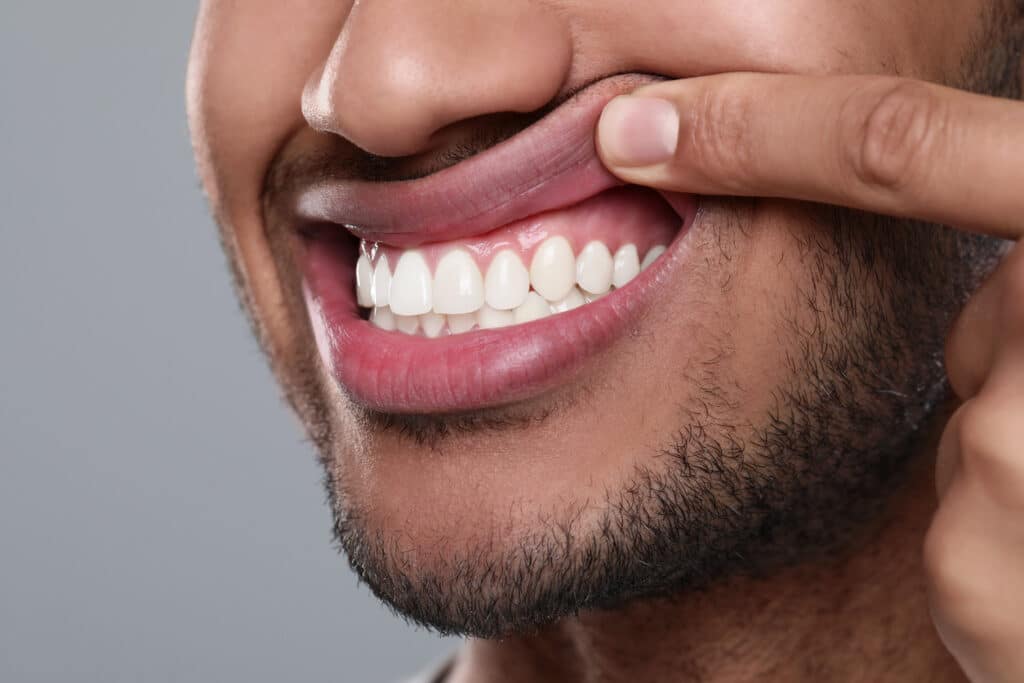
Light bleeding after a cleaning is common. This is a temporary inflammatory response to the removal of calcified tartar from below the gum line. Medical literature supports that residual subgingival calculus, granulation tissue, and severe gingival inflammation were the main causes of emergency gingival bleeding [1] (Lu et al., 2022). This small amount of bleeding usually ceases in 24 to 48 hours as the soft tissues heal and safely reattach to the natural tooth structure.
The Role of Saliva in Healing Your Gums
Clinical literature supports that saliva supports the oral cavity’s healing capacity, particularly through natural growth factors [2] (Vila et al., 2019). Your body has a built-in recovery system for your mouth: your saliva. After your hygienist at Cary Towne Dental clears away stubborn tartar, the raw gum tissue needs a clean environment to reattach to your teeth. Saliva contains specific proteins and minerals that naturally speed up this tissue repair. It also acts as a continuous wash cycle, neutralizing the acids from your food before they can irritate your tender gums. To help your saliva do its job, you must stay hydrated. Limit your intake of caffeine and sports drinks for the first day, as these can dry out your mouth and slow down your natural healing process.
Navigating Taste Changes and Metallic Breath
After a deep cleaning, you may notice a metallic taste or slightly stronger morning breath. Do not worry; this is common and usually temporary. When your gums bleed slightly during the night, the iron in your blood creates that distinct metallic flavor. Furthermore, breaking up heavy colonies of hidden bacteria releases trapped odors. This temporary change in your breath is actually a sign that the infection is clearing out. Simply maintain your brushing routine, gently clean your tongue with your toothbrush, and the metallic taste will fade completely within a day or two.
Post-Cleaning Tissue Responses Compared
Understanding what is normal helps you avoid unnecessary stress. Here is how different post-cleaning symptoms compare so you know exactly when to reach out to our team.
Tissue Response | Typical Cause | Anticipated Healing Time | Maintenance Action |
Mild Bleeding & Pink Spit | Normal tartar removal and tissue flushing. | 24 to 48 hours. | Gentle brushing and twice-daily warm saltwater rinses. |
Cold Temperature Sensitivity | Exposed tooth roots after heavy plaque is removed. | 3 to 7 days. | Switch to a desensitizing toothpaste; avoid ice-cold drinks. |
Prolonged, Heavy Bleeding | Underlying systemic issues or severe, active periodontitis. | Does not resolve on its own. | Contact our clinic immediately for a targeted evaluation. |
Upgrading Your Flossing Technique for Tender Gums
It is common to skip flossing after a cleaning because your gums feel tender, but plaque left between your teeth keeps gums irritated and bleeding. The secret is changing how you floss. Instead of snapping traditional string floss down hard between your teeth, use a gentle gliding motion. Wrap the floss into a “C-shape” around the base of the tooth and slide it up and down smoothly. If string floss is uncomfortable, a water flosser on a low setting or interdental brushes can help in the meantime. This allows you to safely flush out food debris without causing further friction or trauma to the healing tissue. Medical literature supports daily brushing and flossing to help control supragingival plaque and prevent gingivitis [3] (Bosma et al., 2024).
When to Switch From Saltwater to Regular Mouthwash
You want to keep your mouth clean after a hygiene visit, so it is tempting to reach for a strong, minty mouthwash. Put the bottle down. Commercial mouthwashes that contain alcohol will burn your freshly cleaned, raw gum pockets. This chemical burn irritates the tissue and delays your recovery. Stick strictly to a warm saltwater rinse for the first 48 hours. Saltwater acts as a natural, soothing antibacterial agent that draws out inflammation without stinging. Once your gums stop bleeding and no longer feel tender, you can safely return to your regular mouthwash. When you do switch back, we highly recommend choosing an alcohol-free, fluoride-based formula to protect your newly exposed enamel.
Stress, Sleep, and Your Soft Tissue Recovery
Your oral health is directly connected to your total body wellness. If you are a busy professional working long hours in the Triangle area, elevated stress levels can physically slow down your gum recovery. High stress produces cortisol, a hormone that suppresses your immune system and delays tissue repair. To help your gums tighten back up quickly, prioritize your rest. Aim for a full seven to eight hours of sleep the night after your dental cleaning. While you sleep, your body shifts energy toward cellular repair. Combining a good night of rest with your soft diet and saltwater rinses ensures you wake up with firmer, healthier gums and zero lingering discomfort.
FAQS
1. Should I stop using my electric toothbrush if my gums are sore?
Do not stop brushing, but do adjust your technique. Switch your electric toothbrush to its “sensitive” setting if it has one. Let the bristles do the work without pressing hard against your gum line.
2. What foods should I avoid in Cary while my gums heal?
Avoid spicy food, acidic citrus fruits, and crunchy snacks for the first two days. Strong coffee and other acidic drinks, such as kombucha, can irritate your raw gums. Drink enough Wake County tap water to stay hydrated and wash out your mouth.
3. How long should my gums bleed after scaling?
Light bleeding and slight tenderness for 24 to 48 hours is normal.
References
[1] Lu, F., Qi, G. G., Fang, W., Zhang, X., Zhou, J., Yu, X. F., & Li, X. J. (2022). Causes of Emergency Bleeding after Nonsurgical Periodontal Therapy in Adult Periodontitis Patients: A Retrospective Analysis. Applied bionics and biomechanics, 2022, 1579574. https://doi.org/10.1155/2022/1579574 (Retraction published Appl Bionics Biomech. 2023 Nov 1;2023:9757638. doi: 10.1155/2023/9757638.
[2] Vila, T., Rizk, A. M., Sultan, A. S., & Jabra-Rizk, M. A. (2019). The power of saliva: Antimicrobial and beyond. PLoS pathogens, 15(11), e1008058. https://doi.org/10.1371/journal.ppat.1008058
[3] Bosma, M. L., McGuire, J. A., DelSasso, A., Milleman, J., & Milleman, K. (2024). Efficacy of flossing and mouth rinsing regimens on plaque and gingivitis: a randomized clinical trial. BMC oral health, 24(1), 178. https://doi.org/10.1186/s12903-024-03924-4