
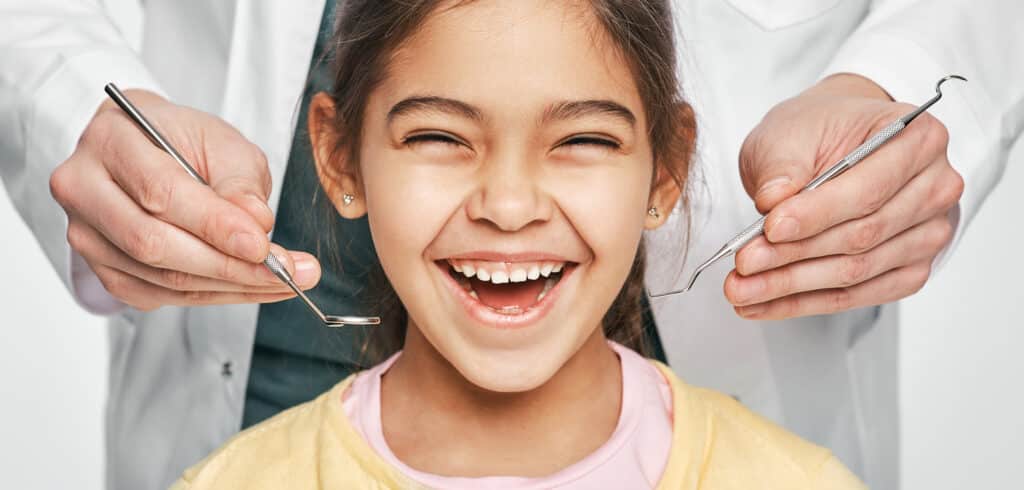
Pediatric preventive dentistry is a specialized branch of dental care focused on protecting a child’s oral health from infancy through adolescence. Clinical literature supports that Pediatric dentists and general dentists have a critical role in preventing and reducing the severity of early childhood caries [1] (Ramos-Gomez et al., 2010). In Cary, NC, these professional guidelines include early intervention exams, biannual routine cleanings, targeted fluoride treatments, and dental sealants.
How Your Child’s Diet Empowers Their Preventive Dental Plan
You want to feed your child healthy meals, but worrying about hidden sugars causing cavities can feel overwhelming. The truth is, preventing tooth decay goes beyond just hiding the candy bowl. Your child’s daily diet has a direct impact on their oral microbiome and enamel strength. Clinical evidence indicates that diet plays an important role in the typical oral dysbiosis of periodontal disease, as it provides nutritional substrates for microorganisms [2] (Santocito et al., 2022). Instead of focusing on strict restrictions, we empower parents with practical dietary strategies. Crisp fruits and vegetables like the fresh apples you pick up at the Cary Downtown Farmers Market act as natural toothbrushes by stimulating saliva production.
The Ultimate At-Home Routine for Wake County Families
Bedtime brushing can quickly turn into a nightly battle, leaving you frustrated and worried about your child’s dental hygiene. The Centers for Disease Control reports that 60.5% of children aged 3–15 years were reported to brush their teeth twice a day [3] (Thornton-Evans et al., 2019). Fortunately, establishing a consistent at-home routine takes the stress out of the process and reinforces the preventive care we provide in our clinic. Because Wake County public water is optimally fluoridated, having your child drink tap water throughout the day is a simple, effective first step. For daily cleaning, follow the “Two-by-Two” rule: brush twice a day for two full minutes using a soft-bristled brush. Once two of your child’s teeth touch, it is time to introduce flossing. If traditional string floss is too difficult for small hands, dental flossers are a fantastic alternative. By framing oral care as a non-negotiable part of the daily routine rather than a chore, you set your child up for lifelong success.
Proactive Prevention vs. Reactive Treatments
Understanding the value of preventive care is easy when you compare it to the alternative.
Care Strategy | Approach | Cost Impact | Durability & Maintenance |
Preventive Care | Cleanings, exams, sealants, and fluoride. | Very Low (Often 100% covered by insurance). | High. Protects natural tooth structure permanently. Minimal maintenance. |
Reactive Restorative | Fillings, crowns, or extractions. | Moderate to High. | Moderate. Fillings may need replacement over decades. Requires closer monitoring. |
Emergency Care | Addressing sudden pain or severe decay. | High. | Variable. Can impact jaw development and spacing if baby teeth are lost early. |
Conquering Dental Fear: Our Gentle Philosophy
No parent wants to bring a child who is crying and nervous into the dental office. Dental anxiety is a very real concern for many young patients, often stemming from a fear of the unknown. At Cary Towne Dental, we eliminate this fear by prioritizing comfort and clear communication over rushing through an appointment. We use a well-tested pediatric approach called “Tell-Show-Do.” First, we explain what we are going to do using kid-friendly language. Then we show them the tools, often letting them touch a safe mirror or feel the water sprayer on their hand. Finally, we perform the step. This structured, transparent pacing builds immediate trust.
Are dental X-rays safe for kids? Modern Diagnostics
When you hear that your child needs X-rays, many are concerned about radiation exposure. You want to protect your child from unnecessary risks naturally. However, skipping these crucial diagnostic images leaves hidden decay untreated until it becomes painful. The technology used in dentistry today is remarkably safe and accurate. Our clinic utilizes state-of-the-art digital radiography. Digital X-rays reduce radiation exposure up to 90% compared to traditional film. We also only take images when it is specifically recommended by American Dental Association guidelines based on your child’s specific risk factors. The high-definition images allow us to see cavities forming between teeth, to watch adult teeth erupt, and to evaluate the health of the jaws long before the naked eye can detect such problems.
Orthodontic Early Screenings: Spot Bite Problems Before They Begin
Every parent will be faced with the daunting prospect of paying for expensive braces in their child’s teen years. Postponing treatment for bite alignment may result in more complex treatments later on. That is why we have early orthodontic screenings in our preventive dentistry guidelines. At age seven, your child will have a mixture of baby and permanent teeth in his or her mouth. During routine preventive visits, we evaluate their bite, jaw growth, and tooth spacing. If we see things like crossbite, severe crowding, or other issues, we can suggest ‘interceptive orthodontics.’ This early Phase 1 treatment gently guides jaw growth, creates space for incoming adult teeth, and often reduces or eliminates the need for lengthy braces later
FAQS
1. What age should I take my child to a preventive dentist in Cary?
You should schedule your child’s first preventive dental visit by their first birthday, or within six months of their first baby tooth coming in. Early visits help us catch potential issues early and get your child comfortable with the dental office environment.
2. Are dental sealants necessary for my child?
While not mandatory, sealants are highly recommended. They are a painless, quick solution applied to the chewing surfaces of back molars. Sealants act as a physical shield, significantly reducing the risk of cavities in the areas where children are most vulnerable to decay.
3. How often does my child need a professional dental cleaning?
Healthy children should visit the dentist every six months for a professional cleaning and routine exam. If your child has a higher risk of cavities or specific orthodontic needs, we may recommend a customized schedule.
References
[1] Ramos-Gomez, F. J., Crystal, Y. O., Ng, M. W., Crall, J. J., & Featherstone, J. D. (2010). Pediatric dental care: prevention and management protocols based on caries risk assessment. Journal of the California Dental Association, 38(10), 746–761.
[2] Santonocito, S., Giudice, A., Polizzi, A., Troiano, G., Merlo, E. M., Sclafani, R., Grosso, G., & Isola, G. (2022). A Cross-Talk between Diet and the Oral Microbiome: Balance of Nutrition on Inflammation and Immune System’s Response during Periodontitis. Nutrients, 14(12), 2426. https://doi.org/10.3390/nu14122426
[3] Thornton-Evans, G., Junger, M. L., Lin, M., Wei, L., Espinoza, L., & Beltran-Aguilar, E. (2019). Use of toothpaste and toothbrushing patterns among children and adolescents — United States, 2013–2016. MMWR. Morbidity and Mortality Weekly Report, 68(4), 87–90. https://doi.org/10.15585/mmwr.mm6804a3